
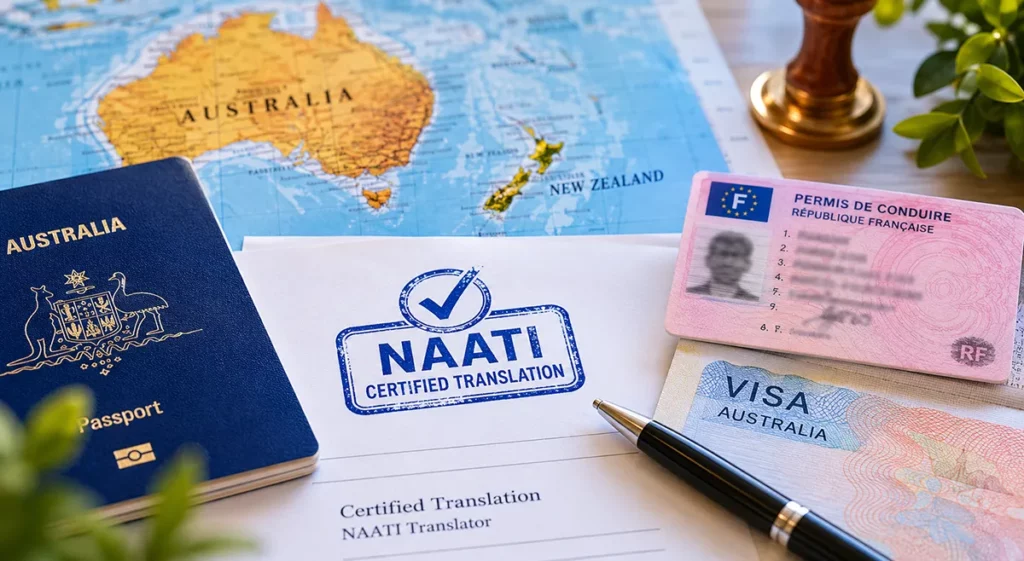
When you search for a certified translation service in Australia, most providers appear to promise the same things: accurate translations, fast turnaround times, competitive prices and professional service.
Those things are important, but they do not tell you what will actually happen after you send your documents.
Who will open and examine them? Will the person answering your questions also translate them? Will your documents be sent overseas? Does the translator understand the country and administrative system that issued them? Can you speak with someone in your own language? What happens if an amendment is required several months – or several years – later?
These questions matter because a certified translation is rarely an isolated purchase. It is usually one part of something much more important: a visa application, an overseas citizenship claim, a court proceeding, professional registration, a family matter, a property transaction or recognition of an academic qualification.
The way a translation business is structured can therefore make a substantial difference to the security of your documents, the speed and accuracy of the work, and the service you receive.
Balkan Translations is an Australian-based specialist translator cooperative working in the Albanian, Bosnian, Bulgarian, Croatian, Greek, English, Hungarian, Macedonian, Montenegrin, Romanian, Serbian, Slovenian and Turkish languages.
Rather than operating as a general agency covering hundreds of languages through a large international supplier network, we connect clients directly with the translators responsible for their work.
That distinction affects communication, speed, privacy, accountability, consistency and the practical assistance available before and after the translation.
At a glance: what makes a specialist translation service different?
A specialist translation service should provide:
- direct communication with the translator;
- clear information about who will access your documents;
- experience with the issuing country and document type;
- a price and turnaround time provided by the person completing the work;
- support if questions or amendments arise;
- consistent handling of related documents;
- appropriate protection of sensitive personal information; and
- practical knowledge of the authority receiving the translation.
Before sending personal documents, ask three basic questions:
Who will see my documents? Where will they be sent? Can I speak directly with the translator?
Will other businesses know what scenes such as the below represent, or is this only something that the Balkan Translations translators and clients can appreciate together?

What should you look for in a certified translation service?
A suitable certified translation provider should offer more than just a stamp at the bottom of a document.
Before proceeding, consider whether the service provides:
- a properly qualified translator for the required language direction;
- direct and accessible communication;
- experience with the document type and issuing country;
- clear prices and reliable turnaround times;
- appropriate protection of personal and sensitive information;
- support if questions or amendments arise;
- knowledge of the authority receiving the translation;
- continuity if further documents are required later; and
- transparency about who will access and process your documents.
A provider may advertise thousands of translators, hundreds of languages or an automated ordering system. Those features can be useful for very large multilingual projects, but they do not necessarily tell an individual client who will personally take responsibility for a birth certificate, police record, court decision, diploma or medical report.
For clients submitting personal or official documents, the more useful question is often much simpler:
Who is actually translating my document, where will it be sent and can I speak directly to the person responsible?
What is a certified translation in Australia?
In Australia, NAATI is the national standards and certifying authority for translators and interpreters. Its Certified Translator credential assesses whether a translator has the skills and competencies required to transfer written information accurately from one language into another.
Australian government departments, courts, universities, professional bodies and other organisations may require translations completed by a translator holding an appropriate NAATI credential. The exact requirement depends on the organisation, application and document involved.
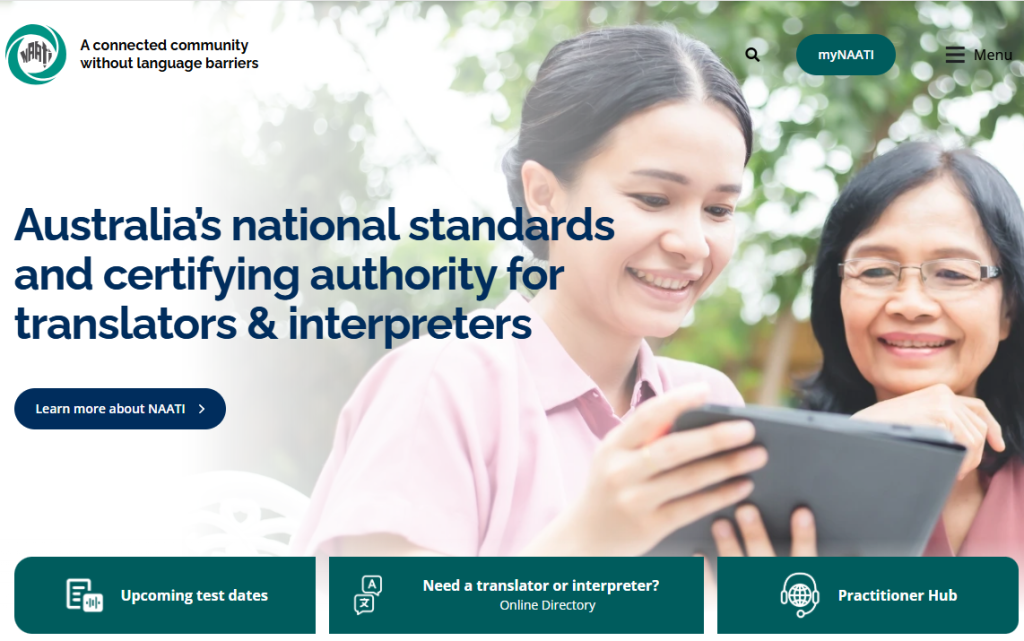
For example, an Australian authority may ask for the translator’s name, certification details and NAATI practitioner number to appear on the translation.
Certification, however, is only the starting point.
It confirms that the translator holds an appropriate professional credential. It does not automatically tell you:
- how much experience the translator has with your document type;
- whether they understand the institution that issued it;
- whether they are familiar with the country’s legal or administrative system;
- whether they were chosen for their expertise or simply because they quoted the lowest price;
- whether you can communicate with them directly;
- how many other people will see your document; or
- whether the translator will remain available if you need assistance later.
The difference between translation providers is therefore not merely whether a NAATI stamp appears on the completed document.
The real difference lies in everything surrounding that stamp: who accepts responsibility for the work, how securely the document is handled, what specialist knowledge the translator brings to it and whether you can obtain meaningful assistance before and after delivery.
A certified translation should be treated as a professional service, not simply as a stamped product.
Why does direct contact with the translator matter?
In a conventional high-volume agency model, several people may become involved before a document reaches the translator.
A client sends an enquiry to a customer-service representative. That representative sends the document to a project manager, who may then circulate it among external translators to obtain prices and confirm availability. Once the work is allocated, the client may continue communicating through administrative staff rather than directly with the person performing the translation.
In many large translation businesses, those customer-service and project-management functions are handled offshore, including through teams based in Southeast Asia or the Philippines.
Using an overseas administrative team is not automatically evidence of poor service. It does, however, create important questions about transparency, document security and professional responsibility.
Clients should be entitled to ask:
- In which country is the person opening my document?
- Is that person a translator or an administrative employee?
- Is my information being transferred outside Australia?
- How many translators will receive the document before the work is allocated?
- Will copies remain in several email inboxes or devices?
- Can I speak directly with the translator?
- Who will resolve a problem if the translator becomes unavailable?
Official documents can contain passport numbers, residential addresses, medical information, criminal-record details, financial information, family relationships and information about children.
Clients should not assume that the person answering an Australian telephone number is necessarily located in Australia – or that they are the person translating the documents.
At Balkan Translations, the person responding to your enquiry is generally one of the translators who will assess or complete the work.
The translator can examine the document, ask relevant questions, provide the price, confirm the turnaround time and discuss unusual terminology without passing instructions through several intermediaries.
Direct contact is particularly useful when:
- a handwritten entry is difficult to read;
- a name appears differently across several documents;
- the purpose of the translation affects how it should be presented;
- the receiving authority has particular requirements;
- part of a stamp or seal is unclear;
- the translation is required urgently;
- an amendment must be discussed;
- an older document uses unfamiliar terminology; or
- the client is uncertain about which pages require translation.
There is less chance of an important instruction being shortened, misunderstood or lost as it passes between different people.
“It was nice to actually speak to someone over the phone and not just an automated phone system.”
— Google review from a Balkan Translations client
Another client said:
“I dealt with Croatian translator, Elizabeth, directly and she was prompt, friendly and professional.”
— Google review from a Balkan Translations client
Direct access does not merely make the experience more pleasant. It creates clear professional accountability. The client knows who has seen the document, who has made the translation decisions and who can answer questions about the completed work.
A translator needs to understand more than two languages
Knowing two languages does not, by itself, make someone suitable to translate an official document.
Documents are products of legal, administrative, educational and cultural systems. A term may have several possible English equivalents, but only one may accurately express the function of the institution, qualification or legal concept in context.
A translator working with documents from Albania, Bosnia and Herzegovina, Bulgaria, Croatia, Greece, Hungary, Kosovo, Macedonia, Montenegro, Romania, Serbia, Slovenia or Turkey may encounter:
- civil-registration terminology;
- municipal and cadastral records;
- court and notarial documents;
- police and criminal-record certificates;
- medical reports and hospital discharge summaries;
- academic qualifications and grading systems;
- inheritance and probate documents;
- employment and pension records;
- military-service documents;
- citizenship decisions; and
- documents issued under former states or earlier administrative systems.
The translator must determine not merely what the individual words say, but what the document means within the system that produced it.
A practical example: police and court certificates from Serbia and the former Yugoslavia
Australian clients often use the term “police check” to describe a single document.
In Serbia and other former Yugoslav countries, however, the information required by an Australian or foreign authority may be divided between documents issued by different institutions.
A person may be asked to obtain an uverenje relating to their criminal record from the police or Ministry of Interior, as well as a separate court-issued potvrda or second uverenje confirming that no criminal proceedings are currently being conducted against them.
The words potvrda and uverenje can both be translated broadly as a certificate, confirmation or attestation. Their correct English description depends on:
- the issuing institution;
- the information being certified;
- the legal purpose of the document;
- the country in which it was issued; and
- the authority receiving the translation.
A translator unfamiliar with the system may treat two documents as interchangeable because their titles appear similar.
A specialist translator examines the issuing body, headings, statutory references, stamps and substantive wording before deciding how each document should be described.
This is why terms such as “police certificate”, “criminal-record certificate”, “court certificate” and “certificate confirming that no proceedings are pending” cannot be selected simply by looking up one word in a dictionary.
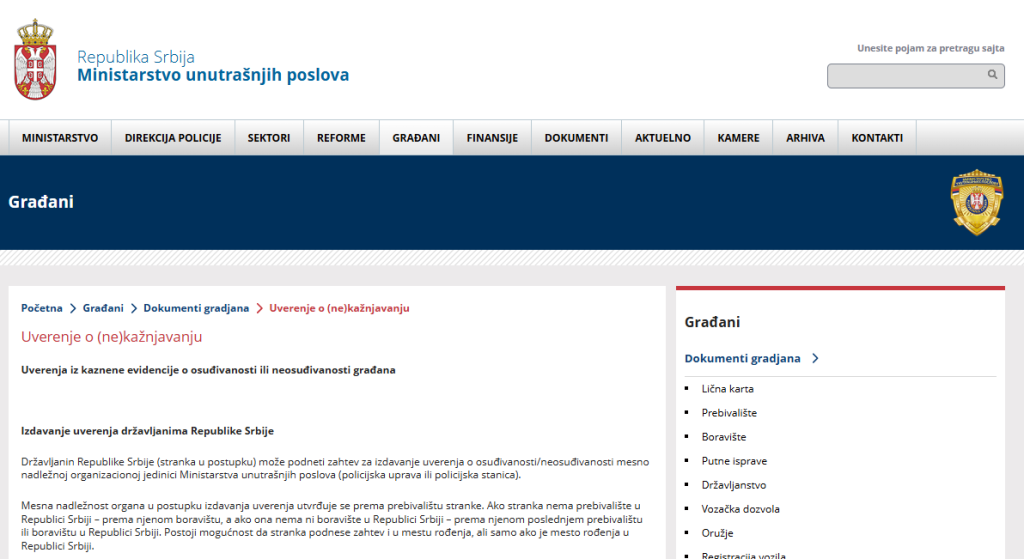
The same issue arises with academic qualifications, citizenship records, municipal departments, land records and documents issued during the Yugoslav period.
A school qualification may not have an exact Australian equivalent. An administrative authority may perform functions divided among several Australian institutions. A document issued decades ago may use terminology that has since disappeared.
A careful translator preserves the meaning of the original without inventing an Australian status or legal effect that the document does not possess.
This requires linguistic ability, research, professional judgment and practical familiarity with both systems.
Specialist knowledge clients can see
Clients often notice the difference between a translator who simply converts the words and one who understands the subject matter behind them.
One client who had previously used several translators wrote:
“I’ve used a few translators in the past with no one meeting my needs. Always some minor errors. I can highly recommend Macedonian translator, Philip, as he not only was professional and prompt but also taught me things along the way. His attention to detail is spot on. Owning a business myself, it’s refreshing to see someone with passion in their field.”
— Google review from a Balkan Translations client
That combination of accuracy, explanation and practical guidance is particularly important when the document forms part of a legal, citizenship or administrative process.
Another client wrote:
“Can not recommend highly enough. Biserka was exceptional with her customer service, efficiency, knowledge and expertise.
I got multiple legal documents from the 1960’s translated from what I thought was Croatian, but turned out to be Serbian, into English to provide to the court.
I’m very very happy and this was a very pleasant experience. I’m glad to have met someone I can trust and this is definitely value for money.”— Google review from a Balkan Translations client
Clients should understand what has been translated, why particular terminology has been selected and whether an apparent discrepancy may need further attention. This is not something that can provided by generalists with no in-language knowledge or by self-service translation platforms.
Why country-specific knowledge is especially important for citizenship applications
Many of our clients are not applying for Australian citizenship. They are Australians seeking citizenship, recognition of descent or restoration of family connections in Croatia, Greece, Serbia, Bulgaria, Macedonia, Cyprus, Hungary, Romania, Kosovo, Slovenia, Turkey or another country in the region.
A client may be applying through a parent, grandparent, spouse, restoration process or another eligibility pathway.
These applications frequently involve documents issued in several countries and at different stages of a family’s history. A typical matter may include:
- an Australian birth certificate;
- a parent’s overseas birth certificate;
- a grandparent’s marriage certificate;
- evidence of a previous name;
- an Australian police check;
- an apostille or authentication;
- proof of residence;
- citizenship declarations;
- application forms; and
- certified passport copies.
Knowing the language is not enough. The translator must often understand how Australian documents fit into the receiving country’s process.
Because our translators work with these matters daily, we are familiar with many recurring document types, terminology issues and practical questions.
We cannot replace an embassy, consulate, citizenship lawyer or government authority, and official requirements can change. However, based on our daily translation experience, we can often:
- identify which documents appear to require translation;
- explain which parts of a document must be included;
- assist with forms where appropriate;
- recognise common inconsistencies in names or dates;
- explain differences between Australian and overseas records; and
- direct clients to the appropriate official source when a question falls outside the translator’s role.
One client described reaching a difficult stage of an international passport process and postponing the matter because of the lack of clear information:
“With a couple of emails from Philip, he guided me through the whole process step by step, giving me actionable steps to get through it all, changing what was an annoying process into a smooth one and the translations being so well done and the easiest part of the whole process.”
— Google review from a Balkan Translations client
That assistance does not replace legal or citizenship advice. It demonstrates the practical value of working with translators who regularly encounter the relevant documents and procedures.
Applying for citizenship or dealing with documents from more than one country?
Send us the documents and explain where they will be submitted. A translator from our specialist team can review the material and explain what translation service we can provide.
Translation between the languages of the region
Citizenship and family matters do not always involve English.
A client may possess Serbian documents that must be submitted to a Croatian authority, Croatian records required in Serbia, or documents from one former Yugoslav republic needed in another.
Many general translation businesses operate primarily through English. When asked for Serbian-to-Croatian, Croatian-to-Serbian or another regional language combination, they may need to locate a new external contractor or translate the document through English.
Balkan Translations has translators with overlapping language credentials and expertise. This allows us to handle translations between a number of the region’s languages within our own specialist team.
We regularly receive requests involving Serbian and Croatian in both directions, as well as other regional language combinations. These translations do not need to be routed through an unrelated general agency or automatically translated through English.
Balkan Translations is the only specialist Australian translation business structured to provide this breadth of translation between Balkan languages in-house.
This is particularly valuable where terminology must be adapted carefully between closely related but distinct official language standards.
The ability to speak in your own language can change the experience
Official processes can be difficult to understand even in a person’s strongest language.
Discussing a court document, citizenship requirement, medical report or family record in English can create additional uncertainty—particularly when the client needs to explain regional terminology, a spelling difference or an unusual family circumstance.
Our translators speak the languages in which they work. Depending on the translator and language required, clients may communicate with us in:
- Albanian;
- Bosnian;
- Bulgarian;
- Croatian;
- Greek;
- Hungarian;
- Macedonian;
- Montenegrin;
- Romanian;
- Serbian;
- Slovenian; or
- Turkish.
This can be particularly helpful for older relatives, newly arrived migrants and family members living overseas.
It also allows the translator to ask precise questions in the language most appropriate to the document. A client can explain how a term is used locally, pronounce a handwritten surname or clarify the relationship between several records without first trying to express everything in English. We frequently both receive, and respond to, emails and enquiries in Hungarian, Romanian, Greek and the other Balkans languages. This is not a service which is, or can be, offered by general translation businesses.
Speaking the language is not an optional customer-service feature added after the translation. It is part of understanding the client, the document and the circumstances in which it will be used.
Why an Australian-based translation team matters
Balkan Translations is an Australian-owned and operated translator cooperative. Clients communicate with real translators who understand the Australian environment in which many translations will be submitted.
Our translators may need to consider:
- Australian terminology and spelling;
- Department of Home Affairs requirements;
- Australian court and tribunal conventions;
- professional-registration applications;
- university and educational admissions;
- Australian medical terminology;
- NAATI certification requirements; and
- the expectations of Australian lawyers, migration professionals and government authorities.
At the same time, our translators retain close linguistic, professional and cultural knowledge of the countries whose documents they translate.
Some members of our team have personally gone through the kinds of processes our clients are now navigating. They understand what it means to migrate to Australia, establish a life in a new country, manage documents across two administrative systems or seek recognition of citizenship and family connections overseas.
That experience does not replace official advice. It does mean the translator understands why the document matters and why a client may be confused, stressed or working under a strict deadline.
Our Australian base also means clients are not directed to an overseas customer-service office.
We do not use offshore customer-service agents to answer enquiries, assess documents, provide quotes or explain translation requirements. The people responding to clients are members of our Australian business and are generally the translators who will assess or complete the work.
The person answering your question is therefore not reading from a script while waiting for an external translator to reply. They can inspect the document, understand its likely purpose and provide an informed response.

Why direct translator access can make urgent translations faster
Urgent translation is not simply a matter of asking somebody to type faster.
Much of the delay in a large agency workflow can occur before the translation begins.
An agency may need to:
- receive and register the request;
- send the document to a project manager;
- identify possible translators;
- request prices and availability;
- compare responses;
- allocate the work;
- relay the proposed deadline to the client; and
- send instructions back through the same chain.
A customer-service representative can usually provide only an estimated turnaround until a translator has accepted the assignment.
At Balkan Translations, the translator examines the scope personally.
Because the person assessing the document knows their own availability, they can give the client a clear price and reliable turnaround time from the beginning. There is no need to wait while the business approaches external translators.
Where capacity and document complexity permit, we regularly complete urgent translations on the same day. Some shorter documents have been completed within two or three hours, and occasionally sooner.
Our clients repeatedly highlight this speed.
One client requiring an urgent English-to-Bosnian translation wrote:
“I had an urgent need for translation of a document from English to Bosnian and found this translation service online. What I expected to be a challenging request was anything but. Elizabeth provided the translated documents digitally within 2 hours and the originals were posted. Best service experience I have had anywhere.”
— Google review from a Balkan Translations client
Another client wrote:
“Fantastic service from Philip. He has great attention to detail and didn’t muck around at all when helping with my Bulgarian documents, replying within the hour and messaging even on weekends.”
— Google review from a Balkan Translations client
Urgent service is always subject to availability, length, legibility and complexity. A lengthy court judgment, handwritten historical record or complex medical report cannot responsibly be treated in the same way as a one-page certificate.
The difference is that the deadline is being given by the person who has actually examined the document and will take responsibility for meeting it. Clients are often surprised that we can deliver translations quicker than anyone else on the market, in a matter of hours, but this comes down to our translators being front and centre of their interactions with clients.
We provide ourselves on being able to service very niche languages such as Romanian, Slovenian and Albanian as commented on by a client below:
“It is the only office so far that I have received service in such record time, especially the translation from Albanian to English. I am completely grateful and will share it with my friends and everywhere else. Thank you 🙏”
— Google review from a Balkan Translations client
Fast service should come from a direct and efficient workflow – not from skipping the professional care required for accurate work.
Why a specialist team offers more continuity than a single translator
Some clients prefer to engage an individual freelance translator. This can provide personal service and direct contact, and many excellent translators operate independently.
The difficulty arises when all knowledge of the client’s documents rests with one person.
That translator may later retire, change careers, take extended leave, become unwell or stop responding. If an authority requests an amendment or the client returns with a related document several years later, no one else may understand the previous terminology, formatting decisions or background.
We have assisted clients who previously used an individual translator but could no longer contact that person when amendments or additional documents were required.
Balkan Translations combines the benefits of direct translator contact with the support of a specialist team.
Several of our translators hold credentials or have expertise across overlapping languages. We can discuss difficult terminology, compare interpretations and obtain a second professional view where appropriate.
We work cooperatively rather than as isolated suppliers.
A particular translator remains responsible for each assignment, but the business is not dependent on one individual remaining available indefinitely.
This gives clients:
- direct access to the responsible translator;
- the combined knowledge of a specialist team;
- greater consistency across related documents;
- backup where another qualified translator is required; and
- continuity throughout a longer migration, citizenship, legal or family journey.
Translation is often part of a longer personal journey
The documents people send to us frequently mark important changes in their lives.
A birth certificate may support a citizenship application. A marriage certificate may be required for a partner visa. A diploma may help someone continue their profession in Australia. A medical report may be needed for treatment or family proceedings. A death certificate and inheritance decision may allow a family to finalise property matters overseas.
For this reason, many clients return at different stages of the same broader journey.
A person may first contact us while preparing to migrate to Australia. After arriving, they may need translations for employment, professional registration or a driver licence. Later, they may sponsor a spouse, bring children to Australia, handle an inheritance overseas or seek citizenship through their family background.
Continuity can be practically important.
Names, transliteration choices, institutional terminology and family relationships may need to remain consistent across several documents.
The same surname may appear:
- with and without a diacritic;
- in Cyrillic, Greek or Latin script;
- under a married and previous name;
- using two historical transliteration systems; or
- with different English spellings across passports and civil records.
A translator who understands what was done previously can identify these differences before they become problems.
Consistency does not mean silently changing the source document. It means recognising the discrepancy, reproducing the evidence accurately and discussing the correct approach with the client.

What happens when corrections or amendments are needed?
Even a carefully prepared translation may later require attention.
The source image may have concealed a handwritten note. A client may provide a clearer scan. An embassy may request a spelling that corresponds with a passport. A receiving authority may request an additional certification statement or require the source document to be attached in a particular way.
When the client has direct access to the translator, these issues are easier to resolve.
There is no need to explain the entire history to a new customer-service representative, who must then attempt to locate the original external contractor.
The translator can review the request, compare it with the source and determine whether the matter involves:
- a genuine translation correction;
- a clarification;
- a clearer source document;
- an additional page;
- a client-requested spelling convention; or
- a request that would improperly alter the meaning of the original.
A professional translator should correct a genuine error promptly. However, they should not change an accurate translation merely to make it agree with a different document without explaining the discrepancy.
Post-translation support is therefore not just customer service. It is part of protecting the accuracy and integrity of the certified translation.
How should a translation service protect sensitive documents?
Documents submitted for translation commonly contain:
- dates and places of birth;
- passport and identity numbers;
- residential addresses;
- medical diagnoses;
- criminal-record information;
- financial details;
- family relationships;
- signatures;
- information about children; and
- court or immigration material.
Before sending these documents, clients should know who will receive them and whether they will be disclosed to third parties.
All generalist translation agencies in Australia email your documents to various translators to find both the cheapest price and see who is available for the request. This what ‘getting a quote’ from various businesses means. It is important for all clients to know, that once you’ve emailed your documents to a generalist translation service, then YOUR personal information will likely sit in the email inbox of an unknown translator forever. This is a serious data protection concern and is something which the translation industry does NOT disclose with their clients.
A client may not know:
- how many people received the document;
- where those people were located;
- whether they retained local copies;
- what security controls applied;
- whether the document remains in their inboxes; or
- whether those copies will ever be deleted.
Every additional recipient creates another location in which personal information may remain. The cheaper the translation agency, the more translators they have emailed to source a quote, and therefore the more copies of your personal documents have been circulated via email.
At Balkan Translations, documents are not outsourced to external translation suppliers nor do we email other translators to ask for quotes.
Access is limited to the people within our business who are handling the enquiry and completing the translation. The person responding to the client is generally one of the people authorised to access the document.
We do not circulate clients’ documents among external translators to obtain prices.
Trust when documents are sensitive
One client specifically compared several translation services before deciding where to send their documents:
“After comparing a couple different translation services, Balkan Translations seemed more reliable, trustworthy with sensitive documents, and offered a better quote, so I took the chance. I’m so glad I did. I dealt with the translator, Elizabeth, directly and she was prompt, friendly and professional. I needed the documents urgently and she had them translated accurately, provided digital versions for proofing and sent out physical copies super fast.”
— Google review from a Balkan Translations client
The client knew who was handling the documents and could communicate directly with that translator throughout the process.
After the work is completed, working copies of the original documents are deleted from our system. We do not maintain a permanent archive of clients’ original source documents.
Our process is intentionally direct:
- The client sends the document to us.
- The responsible translator assesses it.
- The translation is completed within our team.
- The finished work is delivered.
- The source material is removed from our system after completion.
Privacy is not merely a statement in a website footer. It is determined by the actual path a document takes through the business.
Why do lawyers, notaries and embassies refer clients to the same translators?
Our clients are not always members of the public.
We also receive repeat work and referrals from lawyers, migration professionals, notaries public and other practitioners who require dependable translations for their clients.
Professional referrers need to know that:
- terminology will suit the legal or administrative context;
- the structure of the document will be preserved;
- names and dates will be handled carefully;
- stamps, seals and handwritten entries will not be ignored;
- questions will be raised rather than guessed;
- deadlines will be communicated honestly; and
- the translator will remain available if clarification is required.
Our team also receives consistent referrals through the Macedonian, Turkish and Greek Embassies in Australia.
These relationships have developed because our translators are familiar with the relevant languages, documents, communities and administrative processes.
An embassy referral does not mean that every translation is automatically accepted for every purpose. Each embassy, consulate and overseas authority retains its own requirements.
It does, however, demonstrate that specialist knowledge and dependable service are recognised by organisations that regularly encounter these documents.
Trust is built through repeated work rather than marketing claims. When a lawyer, notary, embassy contact or returning client chooses the same translation team again, it is usually because the previous experience was reliable.
Ten questions to ask before ordering a certified translation
The following questions are useful whether you approach Balkan Translations or another provider.
They help you look beyond the advertised price and understand how the business will actually handle your documents.
1. Who will translate my document?
Do not assume that the person answering the telephone or email is the translator.
Ask whether the provider will identify the person responsible and allow you to communicate with them directly.
An agency advertising hundreds of languages and thousands of translators may not allocate the work until after you place the order. You may have no visibility over who receives the document, where that person is located or what relevant experience they possess.
At Balkan Translations, the person assessing your enquiry is generally a translator within our specialist team.
2. Does the translator hold the appropriate credential?
Confirm that the translator holds the correct credential for the required language direction.
Certification should apply to the direction in which the document is being translated. A credential for translating into English does not necessarily authorise a person to certify work from English into the other language.
3. Has the translator worked with this type of document before?
A translator may know the language but have little familiarity with court, medical, academic, citizenship or historical records.
Ask how the translator was selected.
Was the assignment based on:
- experience with the document type;
- subject knowledge;
- familiarity with the issuing country;
- availability; or
- the lowest offered price?
Large agencies frequently allocate work according to supplier cost. Holding a stamp or credential may be the minimum requirement, while detailed experience with the document is treated as secondary.
At Balkan Translations, the translator examines the document before quoting and can tell the client directly whether it falls within their area of experience.
4. Where will my documents be sent?
Ask whether the provider uses overseas administrative staff, external translators or mass requests for quotations.
Some large providers send documents to numerous translators on their supplier panels and allocate the work to the person offering the lowest price.
Those documents may then remain indefinitely in several email accounts or on several devices.
A general promise of confidentiality does not answer the practical question:
How many people will receive my document before somebody is selected to translate it?
At Balkan Translations, documents remain within the team responsible for the enquiry and translation. They are not distributed to an external translator panel.
5. Can I speak with someone in the language of the document?
This is important where the document includes handwriting, regional expressions, historical terminology, name variations or family circumstances that are difficult to explain in English.
Speaking directly with a translator in Albanian, Bosnian, Bulgarian, Croatian, Greek, Hungarian, Macedonian, Montenegrin, Romanian, Serbian, Slovenian or Turkish can make the process clearer and more accurate.
6. What is included in the quoted price?
Clarify whether the quote includes:
- NAATI certification;
- digital delivery;
- printed copies;
- postage;
- urgent service;
- additional certification statements;
- reasonable corrections; and
- amendments requested after the source document changes.
The lowest initial quote may not be the lowest final cost if essential items are added later.
7. Who should I contact if an authority requests a change?
Ask whether you will be able to contact the original translator.
If communication is restricted to an agency, you may have no direct relationship with that translator. The translator may also be unavailable or no longer working with the agency when an amendment is requested.
At Balkan Translations, clients communicate directly with the responsible translator and can return for legitimate corrections, clarification and related documents.
8. Is the proposed deadline definite or estimated?
A large agency can generally provide only an estimated timeframe until an external translator has accepted the assignment.
A specialist translator who has personally examined the document can consider its length, complexity, legibility and their own workload before confirming a deadline.
At Balkan Translations, the proposed timeframe comes directly from the person responsible for completing the work.
9. Does the provider understand where the translation will be used?
A translation for an Australian visa application may have different practical requirements from one intended for a Croatian, Greek, Macedonian, Serbian or Turkish authority.
The provider should ask:
- which country will receive the document;
- which organisation requested it;
- whether an apostille is involved;
- whether digital or printed copies are required; and
- whether any format or certification instructions have been supplied.
10. Will the provider still be available later?
Citizenship, migration, legal and family matters frequently involve additional documents.
If you order through a general agency, you may have no control over which translator receives the work. That person may not be available when another document or amendment is required.
Ask whether the same translator or specialist team will remain available if:
- another document is requested;
- an amendment is needed;
- a spelling discrepancy emerges;
- a family member requires related work; or
- the process continues several years later.
These questions are educational, but they also explain the principles on which Balkan Translations has been built: direct professional responsibility, specialist knowledge, clear communication, controlled access to sensitive documents and continuity.
How Balkan Translations works
Our process is designed to remain direct and straightforward.
1. Send us the documents
Clients email their documents or submit them through our website.
Tell us:
- the language required;
- where the translation will be used;
- whether the matter is urgent;
- whether an authority has provided instructions; and
- whether digital or printed copies are needed.
2. A translator examines the material
A translator working in the relevant language reviews the documents personally.
They assess:
- length;
- complexity;
- legibility;
- language direction;
- document type;
- certification requirements; and
- intended purpose.
3. Receive a clear quote and turnaround time
Because our translator assesses the scope personally, there is no need for you to wait while we approach unrelated external translators.
We can tell you the price and turnaround time from the beginning.
4. Communicate directly
Questions about names, terminology, formatting, requirements and deadlines can be discussed with the translator responsible for the work.
There is no project manager or overseas customer-service agent positioned between the client and translator.
5. Receive the certified translation
Completed translations are generally provided digitally, particularly when they will be used in Australia or New Zealand.
Printed and posted copies can also be arranged when required.
For example, the Croatian, Serbian and Greek embassies require printed hard copies of original certified translations for relevant applications. The Macedonian and Turkish embassies currently accept translations bearing digital NAATI stamps for applicable matters.
Because requirements differ between authorities, we can help confirm the appropriate delivery format for the intended use.
6. Return for further assistance
The responsible translator remains available for reasonable questions, genuine corrections and related documents required later.
Clients do not need to begin again with an unrelated provider each time a new stage of the process arises.
Frequently asked questions
Is Balkan Translations a translation agency?
Balkan Translations is better described as a specialist translator cooperative.
We are a team of professional translators who communicate with one another and directly with our clients.
We combine the personal relationship normally associated with an individual translator with the continuity, overlapping language capability and shared expertise of a specialist team.
Are your translations completed in Australia?
Balkan Translations is Australian owned and operated, and clients deal with our Australian-based team.
We do not use overseas customer-service agents to:
- manage enquiries;
- respond to clients;
- assess documents;
- provide translation guidance; or
- locate external translators after an order is placed.
The people communicating with clients are members of the same specialist business that completes the work.
Can I speak directly with my translator?
Yes.
Direct translator communication is central to our service model. Depending on the language and translator, you may also communicate in the language of the document.
Can you help with urgent translations?
Yes, subject to availability and the complexity of the document.
Some short documents can be completed within several hours. Longer, handwritten or legally complex documents may require more time.
The timeframe is confirmed by a translator who has personally examined the material.
Can you advise me which documents I need for citizenship?
We can share practical information based on our daily translation experience, help identify documents that appear to require translation and direct clients to relevant official sources.
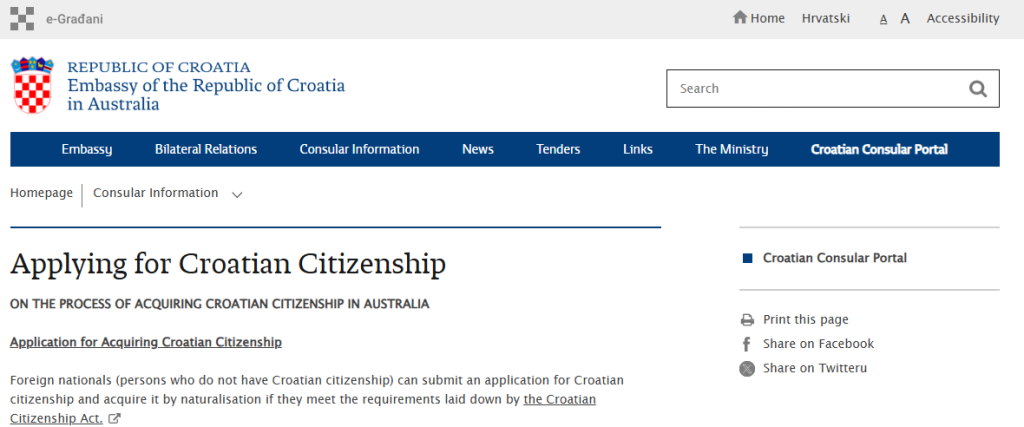
We do not replace legal advice or the formal instructions of an embassy, consulate or citizenship authority. If we can’t help you, then we point you in the direction of this who can – such as the Croatian Embassy website below (or whichever other institution is relevant!)
Do you translate Australian documents into the languages spoken in the Balkan region?
Yes.
Subject to the relevant translator’s credentials and language direction, we translate Australian documents into Albanian, Bosnian, Bulgarian, Croatian, Greek, Hungarian, Macedonian, Montenegrin, Romanian, Serbian, Slovenian and Turkish.
We also translate documents from those languages into English.
Our overlapping team capabilities allow us to assist with certain translations directly between regional languages, including Serbian, Bosnian and Croatian, without automatically using English as an intermediate language.
Can you provide printed translations?
Yes.
Digital translations are available, and printed copies can be posted when required by a client, embassy, consulate or other receiving authority.
What documents do you translate?
Our work includes:
- birth, marriage and death certificates;
- police and court certificates;
- passports and identity documents;
- diplomas and academic records;
- citizenship documents;
- court judgments and legal records;
- medical reports;
- property and land records;
- powers of attorney;
- inheritance documents;
- employment and pension documents; and
- many other personal, legal and administrative records.
Choosing a translation provider is ultimately about responsibility
The most important difference between translation services is not always visible in a price or a list of languages.
It is found in the way responsibility is assigned.
Does one identifiable professional understand your documents and remain accountable for the result?
Can you ask that person a question?
Do they understand the source language, the issuing country and the Australian or overseas context in which the translation will be used?
Do you know where your personal information is being sent?
Will the translator still be available when the next document arrives?
For clients working across Australian and Balkan legal, family and administrative systems, specialist knowledge can make the translation process faster, clearer, safer and less stressful.
Balkan Translations provides certified translations through a different service model:
- direct communication with real translators;
- an Australian-owned and operated team;
- no offshore customer-service layer;
- no unnecessary outsourcing;
- controlled access to sensitive documents;
- practical familiarity with the countries and systems involved;
- overlapping regional language expertise;
- fast and reliable turnaround times;
- cooperation between specialist translators; and
- ongoing assistance as a client’s needs develop.
When your documents relate to your identity, family, profession, citizenship or future, knowing who is translating them matters.
Need a certified translation involving Albanian, Bosnian, Bulgarian, Croatian, Greek, Hungarian, Macedonian, Montenegrin, Romanian, Serbian, Slovenian or Turkish?
Send your documents to Balkan Translations for a clear quote and turnaround time directly from one of our specialist translators.

